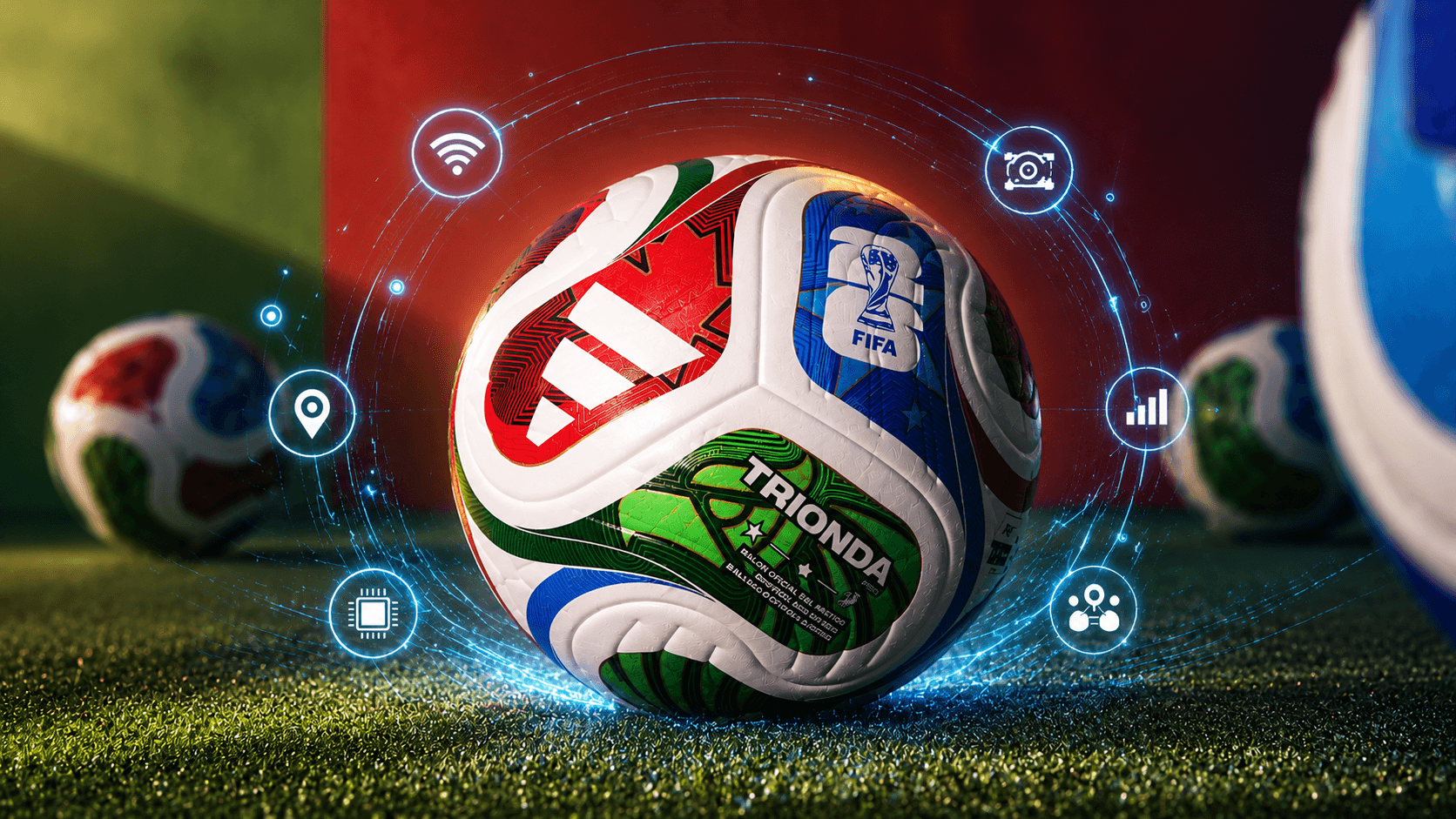
How FIFA World Cup 2026 Connected Ball Technology Works

Author: Karthik Suvarna
June 2026


FIFA World Cup 2026 Connected Ball Technology: Inside TRIONDA and What Real-Time Data Can Teach Businesses
When was the last time technology helped overturn a major decision in a football match? One such moment came during Sweden’s opening Group F match against Tunisia on June 14, 2026.
In the 84th minute, substitute Mattias Svanberg scored only seconds after entering the match. The goal was initially ruled out for offside. Sweden argued that Alexander Isak had made a faint touch before the ball reached Svanberg, creating a new point from which the offside position had to be assessed.
The available camera angles did not make the contact easy to confirm. Connected Ball Technology provided another form of evidence. A waveform-style graphic showed a spike as the ball passed Isak, indicating that the ball had been touched. VAR overturned the original decision, awarded the goal and Sweden went on to win 5-1.
The visual reminded many viewers of cricket's Snickometer, but the underlying method is different. Cricket's familiar comparison is based on audio. In this football incident, the evidence came from a motion sensor inside the ball.
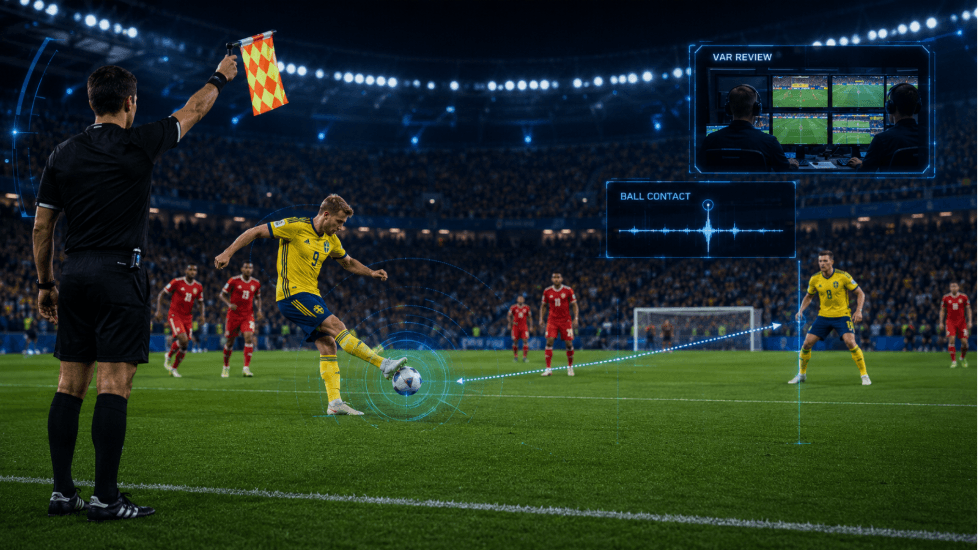
That moment is useful because it shows what connected systems are designed to do. The technology did not replace the referee, and the sensor did not decide whether the goal should stand. It captured a small event that was difficult to see, synchronized that event with the wider match context and made the evidence available while the decision was still being reviewed.
Inside TRIONDA: More Than a Sensor in a Football
TRIONDA is the official match ball of the FIFA World Cup 2026. Its name can be translated as "three waves", reflecting the three host nations: Canada, Mexico and the United States. Its visual design uses red, green and blue, together with symbols associated with each country.
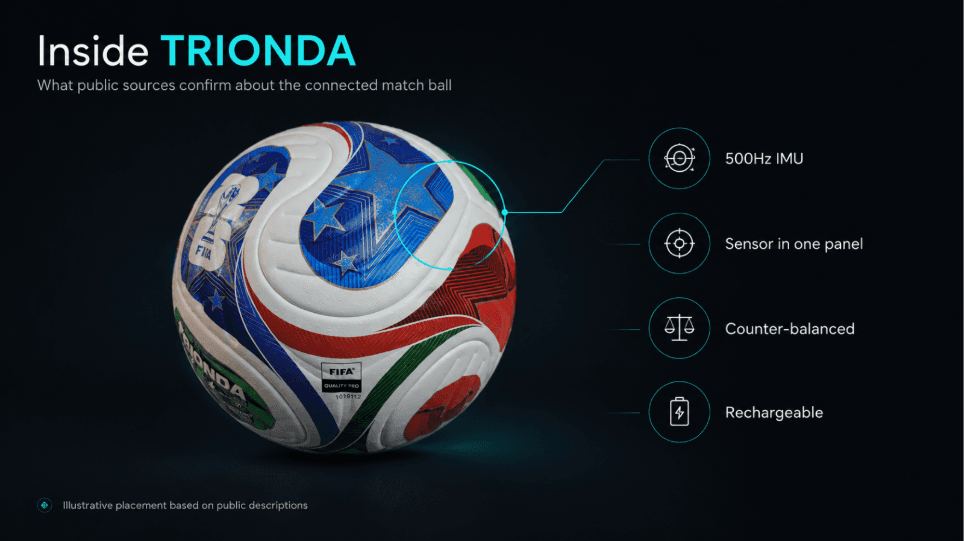
The more important engineering story sits beneath the surface. Earlier connected match balls used a sensor suspended near the centre through a tension-based structure. TRIONDA changes that arrangement. Its tracking unit is positioned inside a specially manufactured layer within one of the ball's four main panels.
Placing electronics away from the centre creates an obvious engineering problem: additional weight in one area could alter the ball's balance or flight. To address this, counter-balances are integrated into the other three panels. The goal is to let the connected ball behave like an elite match ball when it is passed, crossed or struck, even though it contains active electronics.
Those electronics also need power. The connected match balls used for officiating must therefore be charged and prepared before a match. That makes TRIONDA both sporting equipment and an operational technology asset.
What the 500Hz Sensor Actually Captures
At the core of Connected Ball Technology is a 500Hz inertial measurement unit, commonly called an IMU. It records acceleration and rotational movement 500 times every second, which means the system receives a fresh motion sample approximately every two milliseconds.
This high-frequency signal can help identify when the ball was kicked, whether it was deflected and how it was moving. The data can support touch recognition, kick-point detection and close offside reviews. It can also contribute information related to speed, spin and direction.
The distinction matters: the sensor is not an AI referee. It creates precise motion data. AI and other processing systems outside the ball can then combine that signal with video and player-tracking information. The intelligence comes from the complete system, not from one component in isolation.
The Exterior Is Part of the Technology Too
TRIONDA's technology is not limited to its internal electronics. Its physical construction had to be redesigned so that the ball remained predictable at professional speed.
The ball uses four thermally bonded panels with intentionally deep seams. Those seams create sufficient and evenly distributed drag, helping stabilize the ball's path through the air. The bonded construction also reduces water uptake compared with a conventionally stitched surface.
Embossed icons and surface texture provide additional grip when players strike or dribble the ball in wet or humid conditions. A butyl bladder helps maintain air pressure and shape during play.
This is the real product challenge: the ball must provide accurate sensor data without compromising touch, flight, grip, pressure retention or durability. The digital layer succeeds only if the physical product still performs at the highest level.
From Ball Contact to VAR Evidence
A sensor reading becomes useful only when it is connected to the rest of the officiating workflow.
Ball contact → 500Hz sensor → Stadium receiver → VTime synchronization → Video and player tracking → VAR interface → Referee decision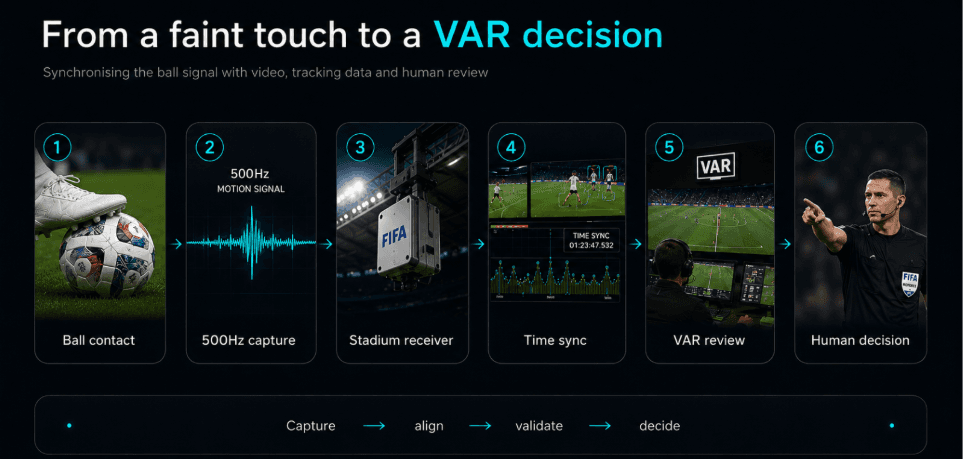
First, the IMU captures the motion created by a kick, deflection or light touch. The signal is then transmitted into the stadium's connected-ball infrastructure. It must be aligned precisely with the match clock, video feeds and player-tracking data.
That synchronization is critical. In an offside review, knowing where the players were positioned is only one part of the problem. Officials also need the correct moment at which the ball was played. Selecting a frame slightly too early or too late can change the result.
Once the signals are aligned, processing systems can present the relevant evidence to VAR officials. The human officials review the information, apply the Laws of the Game and make the final decision.
What the Ball Does Not Do
Connected Ball Technology should not be described as an autonomous decision-maker. It does not understand the complete match situation, determine whether a player is offside or award a goal by itself.
Its role is narrower and more valuable: provide high-resolution evidence about the ball. The wider system supplies player positions, video context, timing, rules and a review interface. Officials remain responsible for interpreting that evidence.
This distinction is important for any AI-enabled or data-driven product. Reliable systems do not ask one model, sensor or service to do everything. They define what each component knows, connect those components carefully and keep human control where judgement and accountability are required.
More Than an Officiating Tool
Connected-ball data can also support other uses. Broadcasters can use speed, spin, touch and trajectory information to explain important moments more clearly. Analysts and coaches can use similar data to study technique, passing patterns and ball movement.
The same event can therefore serve different audiences. Officials need evidence, broadcasters need explanation, analysts need performance data and supporters want a better understanding of what happened.
What Businesses Can Learn From the Connected Ball
The business lesson is not that every product needs a 500Hz sensor. It is that live data becomes valuable only when the surrounding system can understand and act on it in time.
A payment platform may detect an unusual transaction, but the signal must be enriched with account history and risk context before the payment is approved or blocked. A logistics platform may receive a location update, but it must route that event to customer notifications, internal operations and planning systems. An industrial machine may report a vibration change, but the event matters only if it reaches the right monitoring or maintenance workflow quickly.
AI agents face the same challenge. An agent may call a tool, receive a result and continue a workflow, but reliability depends on timing, context, validation, permissions and clear hand-offs between systems.
The recurring pattern is simple:
Capture the event → Add context → Validate it → Route it → Act while it still matters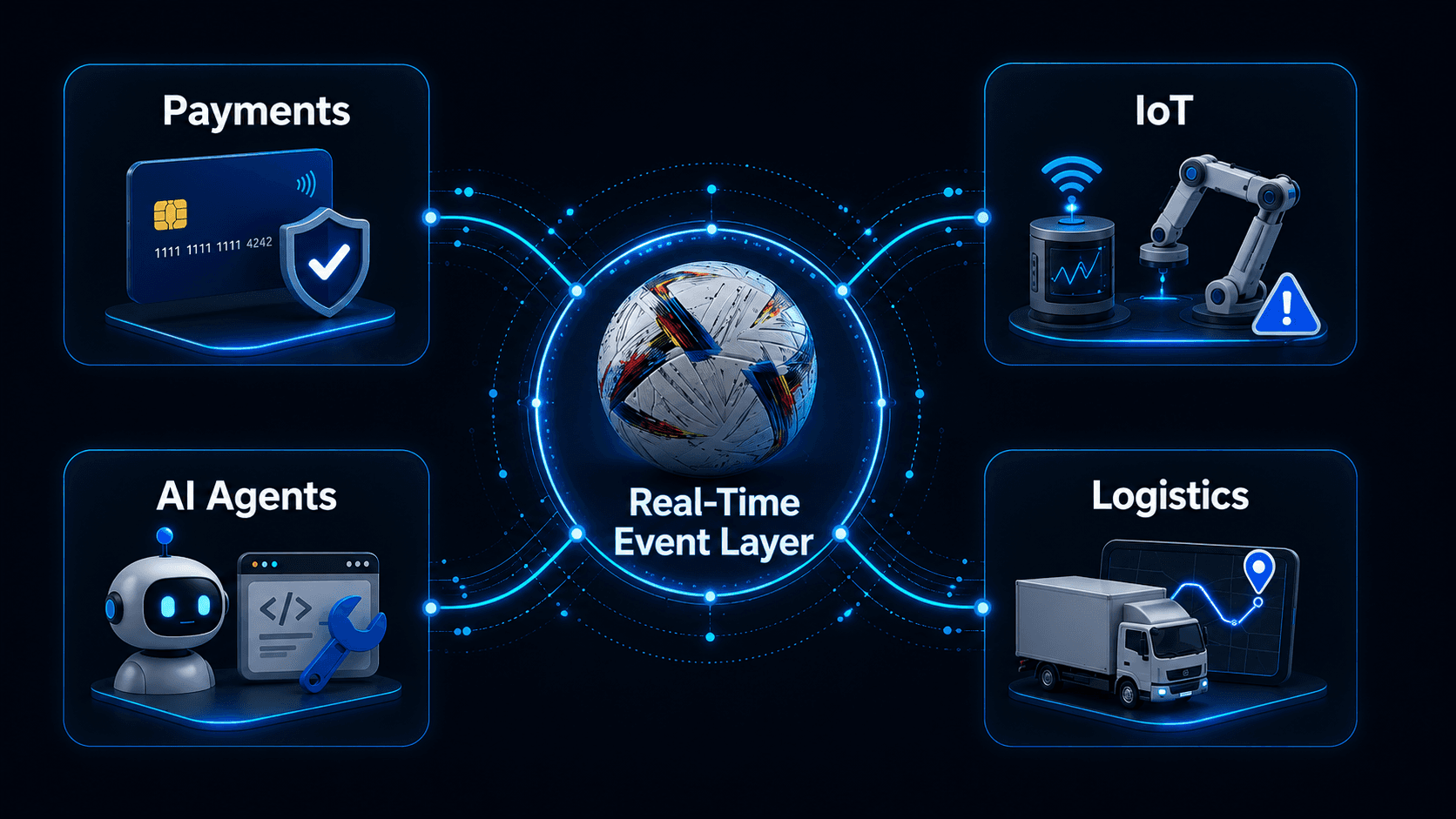
A Real-Time Architecture Perspective
A Realtime Tech, is Aiotrix's product on real-time communication and orchestration platform. Through Live Connect, applications can keep services, dashboards and AI workflows connected through bidirectional channels.
Flash Messaging supports time-sensitive event delivery, while Message Interceptors can validate, transform, enrich or route messages while they are moving through the system.
A Realtime Tech is not connected to FIFA or TRIONDA. The comparison is architectural: both involve receiving a live event, connecting it with the right context and delivering it to the system that can act before the event loses value.
The Real Edge of Connected Ball Technology
The most impressive part of TRIONDA is not simply that a football contains a sensor. It is that Adidas, FIFA and their technology partners have integrated sensing, communication and officiating support without removing the ball's primary responsibility: performing consistently as a football.
During Sweden's match against Tunisia, viewers saw a goal awarded after a long review. Behind that decision was a coordinated system involving the ball, stadium infrastructure, synchronized data, video, player tracking, processing software and human judgement.
That is the wider lesson. When decisions depend on live events, collecting data is not enough. The advantage comes from designing the complete system around that data.
Frequently asked questions
What is TRIONDA?
TRIONDA is the official match ball of the FIFA World Cup 2026. It combines a four-panel aerodynamic design with Connected Ball Technology that sends precise movement data to officiating systems in real time.
What does the 500Hz sensor measure?
The inertial measurement unit records high-frequency acceleration and rotation data 500 times per second. This helps systems identify the precise moment of a kick, touch or deflection and understand how the ball is moving.
Is there an AI referee inside the ball?
No. The ball contains a motion sensor, not an autonomous referee. AI and data-processing systems outside the ball can combine its signal with video and player-tracking information, while match officials make the final decision.
Why does the connected match ball need charging?
The official connected version contains active electronics that capture and transmit movement data. Those electronics require power, so match balls must be charged and prepared before use.
What can businesses learn from Connected Ball Technology?
Capturing an event is only the first step. The event must be synchronized, enriched with context, validated and delivered to the right system while it can still influence an outcome.

Karthik Suvarna
Product & Strategy Lead